AP Art History Summer Assignment 2011-12
Read the last two (2) chapters of your text, Art Through the Ages. Take notes (to be turned in) and be prepared to discuss the chapters and the art the first day of class.
Early 20th Century Art Text: Art Through the Ages – Chapter 33: 961-1028
Ideas and Concepts:
1. Discuss the changes and challenges that faced 20th century artists. Select a minimum of two pieces to support your information. Be sure to include the political atmosphere at the time.
2. Fauvism, Expressionism, Cubism (Abstraction), Purism, Futurism, Dada, Precisionism, Surrealism, Suprematism, Constructivism, De Stijl, The Bauhaus, The International Style, Art Deco, Regionalism. Select one piece of art from each of these art movements and explain why it fits within the movement. Be able to understand and recognize each of these styles.
Later 20th Century Art Text: Art Through the Ages – Chapter 34: 1031-1090
Ideas and Concepts:
1. What were the causes for the shift from Paris to the United States in Western art? Be specific.
2. What is the term “postmodernism”? Use a minimum of two examples from two different artists to define your definition.
3. Abstract Expressionism (action painting and color field), Post-Painterly Abstraction, Minimal, Performance Art, Conceptual Art, Pop Art, Superrealism, Environmental Art. Select one piece of art from each of these art movements and explain why it fits within the movement. Be able to understand and recognize each of these styles.
Monday, June 20, 2011

Sunday, February 13, 2011
Saturday, February 12, 2011
APAH Unit Test 5 15th Century Italian through High Renaissance Study Guide
15th Century Italian to High Renaissance Study Guide
What you need to know:
• 15th Century Italian – Lorenzo Ghiberti and Brunelleschi Baptistery Door competition, medieval narrative method, Florence Cathedral and who did what with it, Masaccio and perspective, key architects of Early Renaissance, characteristics of Early Renaissance, key players of Early Renaissance , Luca della Robbia, Fra Angelico, Nanni Di Banco, Donatello, Botticelli
• High Renaissance – characteristics of High Renaissance, “Bad Boys” of High Renaissance, key architects of High Renaissance, key patrons (including the Medici family, Sforza and others), Pope Julius II, Raphael, the Pope Pauls, Council of Trent, Savonarola and his significance, Bramante, compositional devices of painters, Ruccellai Palazzo, Palladio architecture, Sack of Rome
• Venetian Renaissance – characteristics of, Palladio and his architecture, Bellini, Giorgione, Titian, development of oil paint (and where from, Corregio Parma Cathedral, Savonarola, Reformation (the beginning of and church reaction)
• Vocabulary – linear perspective, perspectival system, chiaroscuro, sfumato, contrapposto, Neo-Platonism. Poesia, disegno, grisalle, pieta
Images to know:
• 15th Century Italian – Florence Cathedral Doors, Dome, Campanile “niche” art, Gentile da Fabriano Adoration of the Magi, Masaccio (all his work), Botticelli Birth of Venus, Andrea Mantegna Dead Christ and Camera degli Sposa, Palazzo Rucellai, The Davids (Verrocchio and Donatello, Gentile da Fabriano Adoration of the Magi, Nanni di Banco
• High Renaissance – Leonardo everything (Last Supper, Madonnas, Mona Lisa etc.), Michelangelo everything (David, tomb, Sistine Chapel etc.), Bramante’s Tempietto, Titian Meeting of Bacchus and Ariadne, Venus of Urbino, Madonna of the Pesaro Family, Assumption of the Virgin, Palazzo Rucellai
• Venetian Renaissance – Titian Venus of Urbino, Bellin San Zaccaria Altarpiece, Correggio Assumption of the Virgin, Giorgione
What you need to know:
• 15th Century Italian – Lorenzo Ghiberti and Brunelleschi Baptistery Door competition, medieval narrative method, Florence Cathedral and who did what with it, Masaccio and perspective, key architects of Early Renaissance, characteristics of Early Renaissance, key players of Early Renaissance , Luca della Robbia, Fra Angelico, Nanni Di Banco, Donatello, Botticelli
• High Renaissance – characteristics of High Renaissance, “Bad Boys” of High Renaissance, key architects of High Renaissance, key patrons (including the Medici family, Sforza and others), Pope Julius II, Raphael, the Pope Pauls, Council of Trent, Savonarola and his significance, Bramante, compositional devices of painters, Ruccellai Palazzo, Palladio architecture, Sack of Rome
• Venetian Renaissance – characteristics of, Palladio and his architecture, Bellini, Giorgione, Titian, development of oil paint (and where from, Corregio Parma Cathedral, Savonarola, Reformation (the beginning of and church reaction)
• Vocabulary – linear perspective, perspectival system, chiaroscuro, sfumato, contrapposto, Neo-Platonism. Poesia, disegno, grisalle, pieta
Images to know:
• 15th Century Italian – Florence Cathedral Doors, Dome, Campanile “niche” art, Gentile da Fabriano Adoration of the Magi, Masaccio (all his work), Botticelli Birth of Venus, Andrea Mantegna Dead Christ and Camera degli Sposa, Palazzo Rucellai, The Davids (Verrocchio and Donatello, Gentile da Fabriano Adoration of the Magi, Nanni di Banco
• High Renaissance – Leonardo everything (Last Supper, Madonnas, Mona Lisa etc.), Michelangelo everything (David, tomb, Sistine Chapel etc.), Bramante’s Tempietto, Titian Meeting of Bacchus and Ariadne, Venus of Urbino, Madonna of the Pesaro Family, Assumption of the Virgin, Palazzo Rucellai
• Venetian Renaissance – Titian Venus of Urbino, Bellin San Zaccaria Altarpiece, Correggio Assumption of the Virgin, Giorgione
Tuesday, February 01, 2011
APAH Slide List Quiz Week 2/1/11
You are responsible to know the information on the images below, including the time period they were created in. Quizzes will be graded on complete accuracy of information.
1. Lornezo Ghiberti, Sacrifice of Isaac, competition panel, Baptistery Doors, Florence, 1401-02
2. Filippo Brunelleschi, Sacrifice of Isaac, competition panel, Baptistery Doors, Florence, 1401-02
3. Donatello, Saint Mark, (patron – guild of linen drapers), Or San Michele, Florence, 1411-1413
4. Gentile da Fabriano, Adoration of the Magi, (patron - Palla Strozzi), Florence, 1423
5. Masaccio, Tribute Money, Brancacci Chapel, Florence, 1427
6. Masaccio, Holy Trinity, Santa Maria Novella, Florence, 1428
7. Donatello, David, (patron – Medici family),1420-1450
8. Sandro Botticelli, Birth of Venus, (patron – Medici family), Florence, 1482
9. Leon Battista Alberti, Palazzo Rucellai, Florence, 1452-1470
10. Andrea Mantegna, Camera degli Sposi, Palazzo Ducale, Mantua, 1474
1. Lornezo Ghiberti, Sacrifice of Isaac, competition panel, Baptistery Doors, Florence, 1401-02
2. Filippo Brunelleschi, Sacrifice of Isaac, competition panel, Baptistery Doors, Florence, 1401-02
3. Donatello, Saint Mark, (patron – guild of linen drapers), Or San Michele, Florence, 1411-1413
4. Gentile da Fabriano, Adoration of the Magi, (patron - Palla Strozzi), Florence, 1423
5. Masaccio, Tribute Money, Brancacci Chapel, Florence, 1427
6. Masaccio, Holy Trinity, Santa Maria Novella, Florence, 1428
7. Donatello, David, (patron – Medici family),1420-1450
8. Sandro Botticelli, Birth of Venus, (patron – Medici family), Florence, 1482
9. Leon Battista Alberti, Palazzo Rucellai, Florence, 1452-1470
10. Andrea Mantegna, Camera degli Sposi, Palazzo Ducale, Mantua, 1474
Thursday, January 27, 2011
Passion for AP Art History Runs Deep!
Created by Catherine Gonzales as a Facebook Event:
FOR INCOMING SENIORS, JUNIORS, SOPHOMORES OF THE 2011-2012 SCHOOL YEAR
With our school district suffering in drowning debt, schools are facing programs being cut. THIS MEANS certain classes/programs YOU were anticipating on joining for the future might not be there without your help!
SO I ask YOU this:
...
Are YOU Dedicated? Willing? Hard working?
Do YOU want your Class Rank/GPA/Transcript to rock?
Do YOU want Colleges to look at you in awe?
Do YOU want to have your name go down in fame?
Then YOU should Join AP Art History.
Please, don't run away from the "AP" because you bet there is TREMENDOUS quality that runs through those two letters.
What is APAH (AP Art History)??
AP Art History is a chance to examine history not on a global scale, but rather on a personal one. Through each piece of art studied in the class we can see reflection of the issues and emotions in those historical periods that make us who we are today.
TOP REASONS TO JOIN
-Get your art credit done, without lifting a paintbrush!
-Gain more knowledge even your Top Ranked Colleagues won't have
-Enjoy a class that is more than a lecture
-Mrs. Kuntz, the wonderful teacher and producer of APAH
-Learn about how you are presently existing, in society, in the world
-Gain College Credit in a blink of the eye!
-Tuesdays: EVERY Tuesday we EAT Sandwiches : Sandwich Tuesday
-Becoming more cultured while sipping on Coffee or Tea
-Trip to Art Muesum
-Belong to something that is MORE than a CLASS but a FAMILY
I'm not asking you to join, I'm asking you to consider what's best for YOU and YOUR future.
PLEASE PLEASE PLEASE Consider Joining.
Thank You for Your Precious Time,
the APAH family
FOR INCOMING SENIORS, JUNIORS, SOPHOMORES OF THE 2011-2012 SCHOOL YEAR
With our school district suffering in drowning debt, schools are facing programs being cut. THIS MEANS certain classes/programs YOU were anticipating on joining for the future might not be there without your help!
SO I ask YOU this:
...
Are YOU Dedicated? Willing? Hard working?
Do YOU want your Class Rank/GPA/Transcript to rock?
Do YOU want Colleges to look at you in awe?
Do YOU want to have your name go down in fame?
Then YOU should Join AP Art History.
Please, don't run away from the "AP" because you bet there is TREMENDOUS quality that runs through those two letters.
What is APAH (AP Art History)??
AP Art History is a chance to examine history not on a global scale, but rather on a personal one. Through each piece of art studied in the class we can see reflection of the issues and emotions in those historical periods that make us who we are today.
TOP REASONS TO JOIN
-Get your art credit done, without lifting a paintbrush!
-Gain more knowledge even your Top Ranked Colleagues won't have
-Enjoy a class that is more than a lecture
-Mrs. Kuntz, the wonderful teacher and producer of APAH
-Learn about how you are presently existing, in society, in the world
-Gain College Credit in a blink of the eye!
-Tuesdays: EVERY Tuesday we EAT Sandwiches : Sandwich Tuesday
-Becoming more cultured while sipping on Coffee or Tea
-Trip to Art Muesum
-Belong to something that is MORE than a CLASS but a FAMILY
I'm not asking you to join, I'm asking you to consider what's best for YOU and YOUR future.
PLEASE PLEASE PLEASE Consider Joining.
Thank You for Your Precious Time,
the APAH family
Wednesday, January 26, 2011
AP Art and AP Art History - Endangered Species?
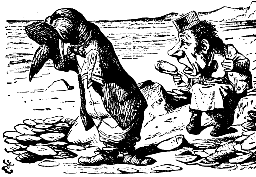
"The time has come," the Walrus said,
"To talk of many things:
Of shoes--and ships--and sealing-wax--
Of cabbages--and kings--
And why the sea is boiling hot--
And whether pigs have wings."
We're in an artistic "crisis" and have been told that unless classes are 25-30 students, they will be canceled...
"It seems a shame," the Walrus said,
"To play them such a trick,
After we've brought them out so far,
And made them trot so quick!"
The Carpenter said nothing but
"The butter's spread too thick!"
Please get the word out to your friends who may be thinking of taking AP Art and AP Art History...
"I weep for you," the Walrus said:
"I deeply sympathize."
With sobs and tears he sorted out
Those of the largest size,
Holding his pocket-handkerchief
Before his streaming eyes.
Let's work together to save the programs and continue on our excellent journey of knowledge and truth!
"O Oysters," said the Carpenter,
"You've had a pleasant run!
Shall we be trotting home again?'
But answer came there none--
And this was scarcely odd, because
They'd eaten every one.
Special thanks to Lewis Carroll, who I'm sure would have loved AP Art History and Art with excerpts from The Walrus and The Carpenter
(from Through the Looking-Glass and What Alice Found There, 1872)
Sunday, January 23, 2011
APAH Slide List Quiz 13 - 1/28/10
You are responsible to know the information on the images below, including the time period they were created in. Quizzes will be graded on complete accuracy of information.
1. Bonaventura Berlinghieri, panel for the St. Francis Altarpiece, 1235
2. Nicola Pisano, pulpit, Baptistery of Pisa,1260, marble
3. Pietro Cavallini, Seated Apostles, detail of the Last Judgment fresco, Santa Cecelia in Trastevere, Rome, 1291
4. Cimabue. Madonna Enthroned with Angels and Prophets, 1280-90
5. Giotto di Bondone, Madonna Enthroned, 1310
6. Giotto, Arena Chapel (Padua), Enrico Scrovegni and the Arena Chapel, 1305-06
7. Giotto di Bondone, Kiss of Judas, from the Arena Chapel (Padua), 1305-6
8. Duccio di Buoninsegna. Maesta Altarpiece, Siena, 1308-1311
9. Simone Martini and Lippo Memmi, Annunciation, 1333
10. Ambrogio Lorenzetti, Allegory of Good Government, Bad Government and the Effects of Bad Government in the City, Palazzo Publicco, Siena, 1338
1. Bonaventura Berlinghieri, panel for the St. Francis Altarpiece, 1235
2. Nicola Pisano, pulpit, Baptistery of Pisa,1260, marble
3. Pietro Cavallini, Seated Apostles, detail of the Last Judgment fresco, Santa Cecelia in Trastevere, Rome, 1291
4. Cimabue. Madonna Enthroned with Angels and Prophets, 1280-90
5. Giotto di Bondone, Madonna Enthroned, 1310
6. Giotto, Arena Chapel (Padua), Enrico Scrovegni and the Arena Chapel, 1305-06
7. Giotto di Bondone, Kiss of Judas, from the Arena Chapel (Padua), 1305-6
8. Duccio di Buoninsegna. Maesta Altarpiece, Siena, 1308-1311
9. Simone Martini and Lippo Memmi, Annunciation, 1333
10. Ambrogio Lorenzetti, Allegory of Good Government, Bad Government and the Effects of Bad Government in the City, Palazzo Publicco, Siena, 1338

Sunday, January 16, 2011
CONGRATULATIONS SCHOLASTIC 2011 WINNERS!
GOLD: Katie Floyd - The Prodigal
Sarai Albert - The Silver Handle
Natalie Marquis - The Feather
Amber Amezquita - Haunted
Krisit Langehennig - Mansfield Park
SILVER: Megan Ingram - Hope
Certificate of Merit:
Ashley Alcantar - A Relaxed Sunday Afternoon
Ashley Curtis - Red Leaf
Sarai Albert - The Silver Handle
Natalie Marquis - The Feather
Amber Amezquita - Haunted
Krisit Langehennig - Mansfield Park
SILVER: Megan Ingram - Hope
Certificate of Merit:
Ashley Alcantar - A Relaxed Sunday Afternoon
Ashley Curtis - Red Leaf
Saturday, January 15, 2011
Unit Test 4 - Romanesque and Gothic
• Romanesque – what does “Romanesque” mean?, parts of a Romanesque portal, eight characteristics of a Romanesque pilgrimage church, dates of the Romanesque period, context for Romanesque and the churches, Abbot Suger and his importance, Y1K and its significance, monasteries and why they were important, Crusades and their significance, significance of stone carving as a hallmark, how the human body was “represented” (canon?)
• Gothic - seven characteristics of Gothic cathedrals, stylistic changes in Gothic architecture and their names (Flamboyant, Rayonnant, Perpendicular, etc.), movement toward greater realism (the N word!), how the human body was portrayed (its reemergence), Giorgio Vasari, significance of Paris, lux nova, Jean Pucelle, “Notre Dame” (the Virgin) and Her significance
• Vocabulary – reliquary, nave, transept, crossing, radiating chapels, ambulatory, choir, triforium, tribune, westwork, cloister, tympanum, trumeau, archivolts, jambs, voussiors, groin vaults, barrel vault, buttress, compound pier, column statues, rose window, lancet window, pointed arch, rib groin vault, stained glass, flying buttress, tracery, verticality, fan vaulting
Images to know:
• Romanesque – Saint-Sernin, Toulouse, France; Bayeux Tapestry, Morgan Madonna, reliquaries (various), Modena Cathedral reliefs (Wiligelmo creation of Adam and Eve), The Pilgrimage Church at Vezelay, Pisa Complex, Durham Cathedral, England
• Gothic – Rottgen Pieta, Death of the Virgin at Strasbourg Cathedral, Virgian of Jeanne d’Evreux, Chartres (west, north and south portals and their differences) Visitation, jamb statues, Reim Cathedral, The Virgin of Paris, Ekkehard and Uta-Naumburg figures, St. Denis, Notre Dame, Paris, Laon Cathedral, Amiens Cathedral, Reims Cathedral, Sainte-Chapelle, Salisbury Cathedral, Milan Cathedral, Cologne Cathedral, Bamberg Rider, the Royal Portal at Chartres, Throne of Wisdom, Porch of the Confessors
• Gothic - seven characteristics of Gothic cathedrals, stylistic changes in Gothic architecture and their names (Flamboyant, Rayonnant, Perpendicular, etc.), movement toward greater realism (the N word!), how the human body was portrayed (its reemergence), Giorgio Vasari, significance of Paris, lux nova, Jean Pucelle, “Notre Dame” (the Virgin) and Her significance
• Vocabulary – reliquary, nave, transept, crossing, radiating chapels, ambulatory, choir, triforium, tribune, westwork, cloister, tympanum, trumeau, archivolts, jambs, voussiors, groin vaults, barrel vault, buttress, compound pier, column statues, rose window, lancet window, pointed arch, rib groin vault, stained glass, flying buttress, tracery, verticality, fan vaulting
Images to know:
• Romanesque – Saint-Sernin, Toulouse, France; Bayeux Tapestry, Morgan Madonna, reliquaries (various), Modena Cathedral reliefs (Wiligelmo creation of Adam and Eve), The Pilgrimage Church at Vezelay, Pisa Complex, Durham Cathedral, England
• Gothic – Rottgen Pieta, Death of the Virgin at Strasbourg Cathedral, Virgian of Jeanne d’Evreux, Chartres (west, north and south portals and their differences) Visitation, jamb statues, Reim Cathedral, The Virgin of Paris, Ekkehard and Uta-Naumburg figures, St. Denis, Notre Dame, Paris, Laon Cathedral, Amiens Cathedral, Reims Cathedral, Sainte-Chapelle, Salisbury Cathedral, Milan Cathedral, Cologne Cathedral, Bamberg Rider, the Royal Portal at Chartres, Throne of Wisdom, Porch of the Confessors
Thursday, January 06, 2011
APAH Unit 3 Test REDO!
Directions: You have 30 minutes to answer this question. Read the question and take a moment to think about what it asks. You can receive full credit only by answering the question asked. Therefore, spend a few minutes organizing or outlining your response in the blank space provided above the question. Notes in the blank space will not be graded. Be sure to analyze each question carefully and choose appropriate examples. Identify your examples as fully as possible.
Early Northern Medieval art is unusual in its context from other time periods. Discuss the history of its conception and follow its path beginning with Anglo-Saxon and ending with Ottonian. Use specific examples of art to justify each of the changes the period progresses through and the context of the art created.
Early Northern Medieval art is unusual in its context from other time periods. Discuss the history of its conception and follow its path beginning with Anglo-Saxon and ending with Ottonian. Use specific examples of art to justify each of the changes the period progresses through and the context of the art created.
Tuesday, December 21, 2010
Tuesday, November 30, 2010
APAH Unit Test 3 - Early Christian - Byzantine Study Guide
What you need to know:
• Early Christian – importance of Constantine, history of Christianity, end of paganism, Fall of Rome and Appropriation (see Homework #9 context); various mosaics and the function of mosaics in Early Christian art, representation of Christ (visual and conceptual), plan and parts of the Early Christian basilica
• Byzantine – three periods of Byzantine art, history of Constantinople (division of Roman Empire and fall of Constantinople), Theocracy, Justinian and his importance, Hagia Sophia and importance of light (meaning), importance and significance of Orthodoxy, Iconoclasm and results of, “3 F’s and a G”
• Vocabulary – icon, iconoclast, orthodox, mandorla, orant figure, narthex, nave, aisles, transept, clerestory, central plan, basilica plan, dome, squinch, pendentive, spolia, tesserae, lunette, theocracy
Images to know:
• Early Christian – Old Saint Peter’s, Rome; Christ seated, Santa Costanza – interior, diagram and ceiling mosaics, The parting of Lot and Abraham mosaic, mausoleum of Galla Placidia, Christ as Good Shepherd, Suicide of Judas and Crucifixion of Christ ivory box, Pala d’Oro, Rossano Gospels, Diptych of the Nicomachi and the Symmachi, Samuel Anointing David, Miracle of the Loaves and Fishes, sarcophagus of Junius Bassus
• Byzantine - Justinian as world conqueror (Barberini Ivory), Hagia Sophia – interior and exterior, San Vitale (building and Justinian/Theodora mosaics, Saint Apollinare in Classe, Ravenna (Saint Apollinaris amid sheep mosaic), Ascension of Christ - Rabbula Gospel, Theotokos and Child between Saints Theodore and George, Crucifixion-Church of the Dormition, Saint Mark’s, Vladimir Virgin,
• Early Christian – importance of Constantine, history of Christianity, end of paganism, Fall of Rome and Appropriation (see Homework #9 context); various mosaics and the function of mosaics in Early Christian art, representation of Christ (visual and conceptual), plan and parts of the Early Christian basilica
• Byzantine – three periods of Byzantine art, history of Constantinople (division of Roman Empire and fall of Constantinople), Theocracy, Justinian and his importance, Hagia Sophia and importance of light (meaning), importance and significance of Orthodoxy, Iconoclasm and results of, “3 F’s and a G”
• Vocabulary – icon, iconoclast, orthodox, mandorla, orant figure, narthex, nave, aisles, transept, clerestory, central plan, basilica plan, dome, squinch, pendentive, spolia, tesserae, lunette, theocracy
Images to know:
• Early Christian – Old Saint Peter’s, Rome; Christ seated, Santa Costanza – interior, diagram and ceiling mosaics, The parting of Lot and Abraham mosaic, mausoleum of Galla Placidia, Christ as Good Shepherd, Suicide of Judas and Crucifixion of Christ ivory box, Pala d’Oro, Rossano Gospels, Diptych of the Nicomachi and the Symmachi, Samuel Anointing David, Miracle of the Loaves and Fishes, sarcophagus of Junius Bassus
• Byzantine - Justinian as world conqueror (Barberini Ivory), Hagia Sophia – interior and exterior, San Vitale (building and Justinian/Theodora mosaics, Saint Apollinare in Classe, Ravenna (Saint Apollinaris amid sheep mosaic), Ascension of Christ - Rabbula Gospel, Theotokos and Child between Saints Theodore and George, Crucifixion-Church of the Dormition, Saint Mark’s, Vladimir Virgin,
Monday, November 29, 2010
APAH Slide List Quiz 12/5/10
You are responsible to know the information on the images below, including the time period they were created in. Quizzes will be graded on complete accuracy of information.
1. St. Michael the Archangel, 6th century
2. Hagia Sophia,, Anthemius of Tralles and Isidorus of Miletus, Constantinople, 532-537
3. Justinian, Bishop Maximianus and attendants, mosaic, San Vitale, Ravenna, Italy 547
4. Saint Apollinaris amid sheep, apse mosaic, Sant’Apollinare in Classe, Ravenna 533-549
5. Christ as Pantokrator, mosaic, Church of the Dormition, Greece, 1090-1100
6. Interior of Saint Mark’s, Venice, Italy 1063
7. Pantokrator, Theotokos and Child, apse mosaic, Monreale, Italy 1180-1190
8. Vladimir Virgin, tempera on wood, late 11th-early 12th century
9. Christ as Savior of Souls, icon from Saint Clement, 14th century
10. Three angels (Old Testament Trinity), Andrei Rublyev, icon, tempera on wood, 1410
1. St. Michael the Archangel, 6th century
2. Hagia Sophia,, Anthemius of Tralles and Isidorus of Miletus, Constantinople, 532-537
3. Justinian, Bishop Maximianus and attendants, mosaic, San Vitale, Ravenna, Italy 547
4. Saint Apollinaris amid sheep, apse mosaic, Sant’Apollinare in Classe, Ravenna 533-549
5. Christ as Pantokrator, mosaic, Church of the Dormition, Greece, 1090-1100
6. Interior of Saint Mark’s, Venice, Italy 1063
7. Pantokrator, Theotokos and Child, apse mosaic, Monreale, Italy 1180-1190
8. Vladimir Virgin, tempera on wood, late 11th-early 12th century
9. Christ as Savior of Souls, icon from Saint Clement, 14th century
10. Three angels (Old Testament Trinity), Andrei Rublyev, icon, tempera on wood, 1410
Friday, October 29, 2010
APAH Unit Test 2 - Proto-Greek to Roman Study Guide
What you need to know:
• Proto-Greek – differences in Minoan and Mycenaean architecture, the role of women abstraction in Cycladic art, Schliemann vs. Evans
• Greek – 5 periods (and approximate date) and stylistic characteristics; what is mimesis; Parthenon vs. Pantheon; Hellenic vs. Hellenistic; characteristics of Greek temple plans; Archaic vase painting (red figure, black figure) differences and development (and creators ); Greek temples vs. Roman; sculptural program of the Acropolis; sculptors (Polyclitus, Praxiteles, Lysippos, Scopas, Myron); Pericles, Polygnotos of Thasos
• Etruscan – who they were; temple differences from Greek; funerary practices (burial/sarcophagus/cemeteries); role of Etruscan women; characteristics of Etruscan sculpture, tomb painting
• Roman – concepts of appropriation, propaganda, utilitarianism, pragmatism; 4 styles of Roman painting; contributions to architecture; development of temples (similarities and differences from Greek and Etruscan); Pantheon; Public works – Roman Forum, baths, basilica (development), amphitheater; triumphal arches, commemorative columns, altars (function, context, content); Christianity/official religion
• Vocabulary – curvilinear, abstraction, chryselephantine, citadel, courses, corbelling, dromos, megaron, tholos, cyclopean masonry, repousse, dipylon vase, raking, isocephaly, frieze, gigantomachy, verisimilitude, mausoleum, cornice, metope, triglyph, peripteral, peristyle, stylobate, stereobate, pediment, entasis, colonnade, dentils, cella, architrave, caryatid, contrapposto, peplos, necropolis, tumulus, sarcophagus, barrel vault, groin vault, oculus, psedo-peripteral, apse, springing, voussoirs, caliderium, tepidarium, frigidarium amphitheater, clerestory, nave, aisles forum, cuirass, illusionism, pragmatism, utilitarianism, appropriation, eclecticism
Images to know:
• Proto-Greek – Cycladic figures, Palace of Knossos, Snake Goddess, Kamares Pottery, Tholos Tomb (Treasury of Atreus), Lion Gate, Agamemnon’s Mask, Citadel of Tiryns
• Greek – Dipylon vases, Lady of Auxerre, various kore, Temple of Artemis, Temple of Hera I at Paestum, Kritios Boy, Charioteer, Temple of Athena Parthenos (Parthenon), chryselephantine Athena Parthenos, Doryphoros, Apoxyomenos (Lysippos), Skopas images (sculptor), Altar of Zeus, Laocoon and Sons, Barberini Faun, Dying Gaul, Seated Boxer, Erecthian
• Etruscan – terra cotta Apollo at Veii, Tomb of the Leopards, Tomb of the Reliefs, Etruscan temple, Reclining Couple (Husband and Wife) Sarcophagus, Aule Metele
• Roman – Temple of Fortuna Virilis, Sanctuary of Fortuna, portrait of Roman general, Ara Pacis Augustan, Pont du Gard, maison Carree, Colosseum, portrait of Vespasian, arches of Titus and Constantine, Forum of Trajan, Column of Trajan, Arch of Trajan, Pantheon, Augustus Primaporta, Hadrian’s Villa, Baths of Neptune, pedestal Column of Antoninus Pius, Equestrian statue of Marcus Aurelius, painted portrait of Septimius Severus, portrait of Caracalla, Baths of Caracalla, portrait bust of Trajan Decius, Trebonianus Gallus, portrait of Constantine, Basilica of Constantine, four tetrarchs
• Proto-Greek – differences in Minoan and Mycenaean architecture, the role of women abstraction in Cycladic art, Schliemann vs. Evans
• Greek – 5 periods (and approximate date) and stylistic characteristics; what is mimesis; Parthenon vs. Pantheon; Hellenic vs. Hellenistic; characteristics of Greek temple plans; Archaic vase painting (red figure, black figure) differences and development (and creators ); Greek temples vs. Roman; sculptural program of the Acropolis; sculptors (Polyclitus, Praxiteles, Lysippos, Scopas, Myron); Pericles, Polygnotos of Thasos
• Etruscan – who they were; temple differences from Greek; funerary practices (burial/sarcophagus/cemeteries); role of Etruscan women; characteristics of Etruscan sculpture, tomb painting
• Roman – concepts of appropriation, propaganda, utilitarianism, pragmatism; 4 styles of Roman painting; contributions to architecture; development of temples (similarities and differences from Greek and Etruscan); Pantheon; Public works – Roman Forum, baths, basilica (development), amphitheater; triumphal arches, commemorative columns, altars (function, context, content); Christianity/official religion
• Vocabulary – curvilinear, abstraction, chryselephantine, citadel, courses, corbelling, dromos, megaron, tholos, cyclopean masonry, repousse, dipylon vase, raking, isocephaly, frieze, gigantomachy, verisimilitude, mausoleum, cornice, metope, triglyph, peripteral, peristyle, stylobate, stereobate, pediment, entasis, colonnade, dentils, cella, architrave, caryatid, contrapposto, peplos, necropolis, tumulus, sarcophagus, barrel vault, groin vault, oculus, psedo-peripteral, apse, springing, voussoirs, caliderium, tepidarium, frigidarium amphitheater, clerestory, nave, aisles forum, cuirass, illusionism, pragmatism, utilitarianism, appropriation, eclecticism
Images to know:
• Proto-Greek – Cycladic figures, Palace of Knossos, Snake Goddess, Kamares Pottery, Tholos Tomb (Treasury of Atreus), Lion Gate, Agamemnon’s Mask, Citadel of Tiryns
• Greek – Dipylon vases, Lady of Auxerre, various kore, Temple of Artemis, Temple of Hera I at Paestum, Kritios Boy, Charioteer, Temple of Athena Parthenos (Parthenon), chryselephantine Athena Parthenos, Doryphoros, Apoxyomenos (Lysippos), Skopas images (sculptor), Altar of Zeus, Laocoon and Sons, Barberini Faun, Dying Gaul, Seated Boxer, Erecthian
• Etruscan – terra cotta Apollo at Veii, Tomb of the Leopards, Tomb of the Reliefs, Etruscan temple, Reclining Couple (Husband and Wife) Sarcophagus, Aule Metele
• Roman – Temple of Fortuna Virilis, Sanctuary of Fortuna, portrait of Roman general, Ara Pacis Augustan, Pont du Gard, maison Carree, Colosseum, portrait of Vespasian, arches of Titus and Constantine, Forum of Trajan, Column of Trajan, Arch of Trajan, Pantheon, Augustus Primaporta, Hadrian’s Villa, Baths of Neptune, pedestal Column of Antoninus Pius, Equestrian statue of Marcus Aurelius, painted portrait of Septimius Severus, portrait of Caracalla, Baths of Caracalla, portrait bust of Trajan Decius, Trebonianus Gallus, portrait of Constantine, Basilica of Constantine, four tetrarchs
Saturday, October 23, 2010
Slide List Week 12 10/25/10
You are responsible to know the information on the images below, including the time period they were created in. Quizzes will be graded on complete accuracy of information.
1. Temple of “Fortuna Virilis”, Rome, 75 BCE
2. Head of a Roman Patrician (Otricoli), 75-50 BCE
3. Portrait of a general from Tivoli, Italy, 75-50 BCE
4. The Battle of Issus (Alexander the Great Battling Darius), mosaic, 100 BC
5. Atrium of the House of the Silver Wedding (Pompeii), 1st century BCE
6. First Style (Masonry Style) wall painting, Samnite House late 2nd century BCE
7. Dionysiac mystery frieze, Second Style, Villa of the Mysteries, Pompeii, 60-50 BCE
8. Ixion Room of the House of the Vettii, Fourth Style, (Pompeii), 70-79 CE
9. Portrait of baker and his wife, wall painting, Pompeii, 70 – 79 CE
10. Augustus (Primaporta), copy of a bronze original, 20 BCE
1. Temple of “Fortuna Virilis”, Rome, 75 BCE
2. Head of a Roman Patrician (Otricoli), 75-50 BCE
3. Portrait of a general from Tivoli, Italy, 75-50 BCE
4. The Battle of Issus (Alexander the Great Battling Darius), mosaic, 100 BC
5. Atrium of the House of the Silver Wedding (Pompeii), 1st century BCE
6. First Style (Masonry Style) wall painting, Samnite House late 2nd century BCE
7. Dionysiac mystery frieze, Second Style, Villa of the Mysteries, Pompeii, 60-50 BCE
8. Ixion Room of the House of the Vettii, Fourth Style, (Pompeii), 70-79 CE
9. Portrait of baker and his wife, wall painting, Pompeii, 70 – 79 CE
10. Augustus (Primaporta), copy of a bronze original, 20 BCE
Sunday, October 17, 2010
APAH Slide List Quiz 10/19/10
You are responsible to know the information on the images below, including the time period they were created in. Quizzes will be graded on complete accuracy of information.
1. Fibula with Orientalizing lions, Regolini-Galassi Tomb,650-640 BCE
2. Apulu (Apollo), Portonaccio Temple (Veii), 510-500 BCE
3. Sarcophagus of the Spouses (Cerveteri), 520 BCE
4. Tomb of Shields and Chairs, main chamber, 600 BCE
5. Tomb of the Reliefs, (Cerveteri), 3rd century BCE
6. Banqueters and musicians, the Tomb of the Leopards (Tarquinia), 480-470 BCE
7. Diving and fishing, Tomb of Hunting and Fishing (Tarquinia) 530-520 BCE
8. Capitoline Wolf (Rome), 500-480 BCE
9. Sarcophagus of Ramtha Visnai (Vulci), 300 BCE
10. Aule Metele (Arringatore, Orator), early 1st century BCE
List the individual time periods for each piece and bring in Friday, 10/23/09 - Quiz Day!
1. Fibula with Orientalizing lions, Regolini-Galassi Tomb,650-640 BCE
2. Apulu (Apollo), Portonaccio Temple (Veii), 510-500 BCE
3. Sarcophagus of the Spouses (Cerveteri), 520 BCE
4. Tomb of Shields and Chairs, main chamber, 600 BCE
5. Tomb of the Reliefs, (Cerveteri), 3rd century BCE
6. Banqueters and musicians, the Tomb of the Leopards (Tarquinia), 480-470 BCE
7. Diving and fishing, Tomb of Hunting and Fishing (Tarquinia) 530-520 BCE
8. Capitoline Wolf (Rome), 500-480 BCE
9. Sarcophagus of Ramtha Visnai (Vulci), 300 BCE
10. Aule Metele (Arringatore, Orator), early 1st century BCE
List the individual time periods for each piece and bring in Friday, 10/23/09 - Quiz Day!
Monday, September 27, 2010
APAH Quiz 5 Week 9/27/10
You are responsible to know the information on the images below, including the time period they were created in. Quizzes will be graded on complete accuracy of information.
1. Hercules and centaur, 750-730 BCE
2. Mantiklos Apollo, Thebes, Greece, 700-680 BCE
3. Lady of Auxerre, limestone kore, 650-625 BCE
4. Calf Bearer, dedicated by Rhonbos on the Acropolis, Athens, Greece, 560 BCE
5. Kroisos, Anavysos, Greece, 530 BCE
6. West pediment, Temple of Artemis, Corfu, Greece, 600-580 BCE
7. Dying warriors, west/east pediments, Temple of Aphaia, 500-490, 490-480 BCE
8. Kritios Boy, Acropolis, Athens, Greece 480 BCE
9. Charioteer, Sanctuary of Apollo, Delphi, Greece, 470 BCE
10. Diskobolos, Myron, bronze original 450 BCE
11. Doryphoros, Polykleitos, bronze original 450-440 BCE
Period created:
1._______________________________________ 2._______________________________________ 3._______________________________________ 4._______________________________________ 5._______________________________________ 6._______________________________________ 7._______________________________________ 8._______________________________________ 9._______________________________________ 10.______________________________________
11.______________________________________
1. Hercules and centaur, 750-730 BCE
2. Mantiklos Apollo, Thebes, Greece, 700-680 BCE
3. Lady of Auxerre, limestone kore, 650-625 BCE
4. Calf Bearer, dedicated by Rhonbos on the Acropolis, Athens, Greece, 560 BCE
5. Kroisos, Anavysos, Greece, 530 BCE
6. West pediment, Temple of Artemis, Corfu, Greece, 600-580 BCE
7. Dying warriors, west/east pediments, Temple of Aphaia, 500-490, 490-480 BCE
8. Kritios Boy, Acropolis, Athens, Greece 480 BCE
9. Charioteer, Sanctuary of Apollo, Delphi, Greece, 470 BCE
10. Diskobolos, Myron, bronze original 450 BCE
11. Doryphoros, Polykleitos, bronze original 450-440 BCE
Period created:
1._______________________________________ 2._______________________________________ 3._______________________________________ 4._______________________________________ 5._______________________________________ 6._______________________________________ 7._______________________________________ 8._______________________________________ 9._______________________________________ 10.______________________________________
11.______________________________________
Monday, September 20, 2010
APAH Quiz 4 Week 9/21/09
You are responsible to know the information on the images below, including the time period they were created in. Quizzes will be graded on complete accuracy of information.
1. Male lyre player, Cyclades, Greece, 2700-2500 BCE
2. La Parisienne, Minoan woman, palace of Knossos, Crete, 1450-1400 BCE
3. Bull leaping, palace of Knossos, Crete, 1450-1400 BCE
4. Spring Fresco, Akrotiri, Crete, 1650 BCE
5. Marine Style Octopus Jar, Crete, 1500 BCE
6. Harvester Vase, Crete, 1500 BCE
7. Snake Goddess, palace of Knossos, Crete, 1600 BCE
8. Lion Gate, Mycenae, Greece, 1300-1250 BCE
9. Treasury of Atreus, Mycenae, 1300-1250 (interior view and front)
10. Funerary mask, Grave Circle A, Mycenae, 1600-1500 BCE
11. Warrior Vase, Mycenae, 1200 BCE
Period created:
1._______________________________________
2._______________________________________
3._______________________________________
4._______________________________________
5._______________________________________
6._______________________________________
7._______________________________________
8._______________________________________
9._______________________________________
10.______________________________________
11.______________________________________
1. Male lyre player, Cyclades, Greece, 2700-2500 BCE
2. La Parisienne, Minoan woman, palace of Knossos, Crete, 1450-1400 BCE
3. Bull leaping, palace of Knossos, Crete, 1450-1400 BCE
4. Spring Fresco, Akrotiri, Crete, 1650 BCE
5. Marine Style Octopus Jar, Crete, 1500 BCE
6. Harvester Vase, Crete, 1500 BCE
7. Snake Goddess, palace of Knossos, Crete, 1600 BCE
8. Lion Gate, Mycenae, Greece, 1300-1250 BCE
9. Treasury of Atreus, Mycenae, 1300-1250 (interior view and front)
10. Funerary mask, Grave Circle A, Mycenae, 1600-1500 BCE
11. Warrior Vase, Mycenae, 1200 BCE
Period created:
1._______________________________________
2._______________________________________
3._______________________________________
4._______________________________________
5._______________________________________
6._______________________________________
7._______________________________________
8._______________________________________
9._______________________________________
10.______________________________________
11.______________________________________
Monday, September 13, 2010
Elements and Principles - The Foundation of Art
6 Elements – Foundation of Art Making:
Line – Sketch, Contour, Expressive, Loose, Tight, Curved, Diagonal, Horizontal, etc.
Shape – 2D, Flat
Form – 3D, In the Round
Color – Monochromatic, Analogous, Complimentary, Split Complimentary (The split complementary scheme is a variation of the standard complementary scheme. It uses a color and the two colors adjacent to its complementary), Triad (three colors equally spaced around the color wheel)
Value – More contrast creates more drama. Similar values would create more calmness.
Texture – Actual and Implied
8 Principles of Design – Rules that govern how the elements are used:
Rhythm – Indicates movement by the repetition of elements, Motifs can be repeated
Movement – Used to create the look and feeling of an action and guide the viewer’s eyes throughout the work of art
Balance – Concerned with equalizing visual forces, Symmetrical and Asymmetrical, Informal Balance
Proportion – Concerned with the size relationship of one part to another, Realism, Exaggeration and Distortion, Hierarchal Proportion
Variety – Concerned with difference or contrast
Emphasis – Makes one part of a work dominant over the other parts, Focal Point
Harmony – Creates unity by stressing the similarities of separate by related parts
Unity – Quality of wholeness or oneness that is achieved through the effective use of the Elements and Principles of Art
Line – Sketch, Contour, Expressive, Loose, Tight, Curved, Diagonal, Horizontal, etc.
Shape – 2D, Flat
Form – 3D, In the Round
Color – Monochromatic, Analogous, Complimentary, Split Complimentary (The split complementary scheme is a variation of the standard complementary scheme. It uses a color and the two colors adjacent to its complementary), Triad (three colors equally spaced around the color wheel)
Value – More contrast creates more drama. Similar values would create more calmness.
Texture – Actual and Implied
8 Principles of Design – Rules that govern how the elements are used:
Rhythm – Indicates movement by the repetition of elements, Motifs can be repeated
Movement – Used to create the look and feeling of an action and guide the viewer’s eyes throughout the work of art
Balance – Concerned with equalizing visual forces, Symmetrical and Asymmetrical, Informal Balance
Proportion – Concerned with the size relationship of one part to another, Realism, Exaggeration and Distortion, Hierarchal Proportion
Variety – Concerned with difference or contrast
Emphasis – Makes one part of a work dominant over the other parts, Focal Point
Harmony – Creates unity by stressing the similarities of separate by related parts
Unity – Quality of wholeness or oneness that is achieved through the effective use of the Elements and Principles of Art
Subscribe to:
Posts (Atom)